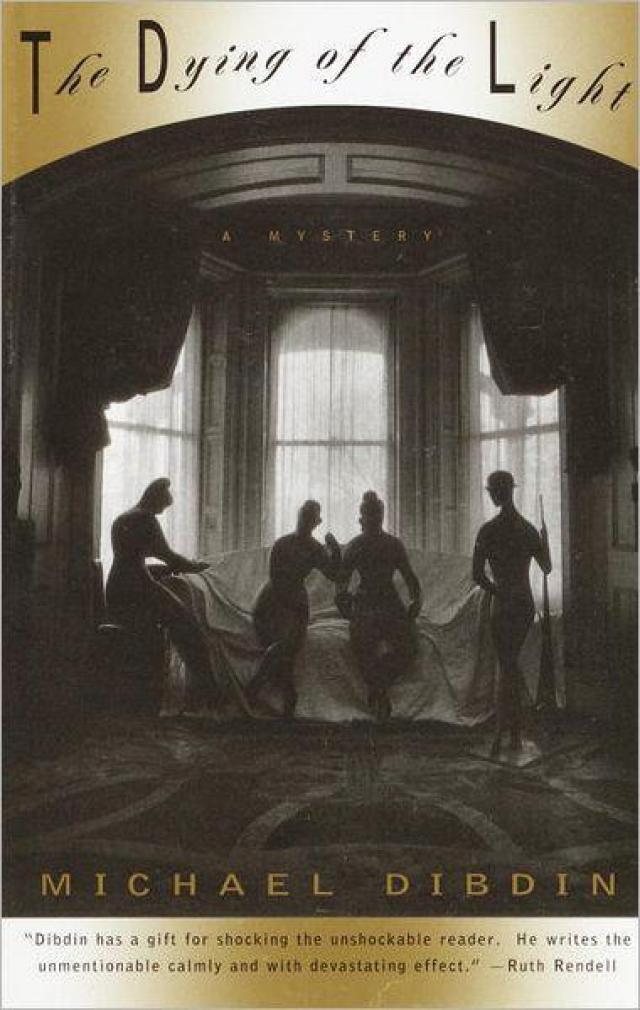
The Dying of the Light: A Mystery
Michael Dibdin
Michael Dibdin
One of England's most acclaimed younger mystery writers, the creator of Detective Aurelio Zen, gives us a brilliant and haunting variation on the classic drawing-room murder novel. The setting is Eventide Lodge, where the guests have gathered for tea. Colonel Weatherby is reading by the fire. Mrs. Hargreave III is whiling away her time at patience. And Miss Rosemary Travis and her friend, Dorothy, are wondering which of their housemates will be the next to die.For even as Michael Dibdin's elderly sleuths debate clues and motives, it becomes clear that Eventide Lodge is not a genteel country inn but a place of ghastly cruelties and humiliations. A place where the logic of murder is . . .almost comforting. At once affectionate homage and audacious satire, The Dying of the Light will delight any aficionado of Patricia Highsmith, Peter Dickinson, or Ruth Rendell.From Kirkus ReviewsImmured in a beastly nursing home run by smarmy William Anderson and his foulmouthed sister Letitia Davis, Rosemary Travis, abetted by her cooperative chum Dorothy Davenport, keeps her spirits up by embroidering the horrors of life at Eventide Lodge into a baroque Golden Age mystery plot--a plot that casts each of her innocuous fellow-geriatrics as a possible suspect when Hilary Bryant dies or George Channing attempts to escape and is mauled by Anderson's Doberman. But when Dorothy, on the eve of her departure for the hospital for terminal-cancer treatment, dies of a fantastic concoction of liquor and pills, Rosemary has a real-life mystery on her hands. Or does she? Did Dorothy really kill herself? Or was Anderson getting rid of her as expeditiously as possible? Or was the killer some other patient? Or is the whole plot one last fictional legacy of Dorothy's? Once again, Dibdin, author of Ratking and the Aurelio Zen novels (Vendetta, 1991, etc.), produces a tale as piercingly funny as Tom Stoppard--and as wise about the powers of fiction to deal with an unspeakable world. -- Copyright ©1993, Kirkus Associates, LP. All rights reserved.Review"Dibdin has a gift for shocking the unshockable reader. He writes the unmentionable calmly and with devastating effect."—Ruth Rendell"Horribly, monstrously funny . . . a merry and maddening jeu d'esprit."—The Independent on Sunday"An elegant novel."—Boston Globe"As appealing as it is inventive."—The Sunday Times
Read online

Blood Rain - 7
Michael Dibdin
Michael Dibdin
Amazon.com ReviewPenzler Pick, May 2000: Dibdin's six Aurelio Zen novels (beginning with Ratking, which won the 1988 Golden Dagger Award) are as vividly Italian as if this English writer had never strayed far from the Via Veneto, despite the fact that he has, in fact, been expatriated for several years now to the Pacific Northwest. His hero, a battle-weary but still morally engaged Roman police investigator, is one of the more elegantly vulnerable characters in the genre, a figure who resembles Nicolas Freeling's Inspector Van der Valk in his ability to bring triumph to situations and yet never have them seem like victories. Moreover, like Van der Valk, Zen's greatest talent seems to be for making new enemies among his colleagues. In Blood Rain, Zen has been exiled to Sicily under the guise of acting as a sort of watchdog, observing a recently reestablished anti-Mafia taskforce. By the nature of the locale--Sicily makes its own rules--the fact that the work of this commission will inevitably be compromised seems clear. But where the cracks in the system will reveal themselves is harder to figure out until, of course, it's too late. Distracted by his dying mother back in Rome and by the island's perverse feuds and even stranger loyalties, and paying not quite enough attention to the professional travails of his beautiful adopted daughter, Carla, a computer specialist, Zen travels his usual idiosyncratic route to a crime's resolution. As always, he is most intrigued by the ambiguities of the situation--and is doomed to be the sacrificial scapegoat.Dibdin seems to be incapable of writing a bad book, and the Zen novels are his best work. Blood Rain causes the reader to gasp frequently in genuine surprise, as well as in admiration for the way Dibdin accomplishes his effects. The intensity of these sensations is something to be grateful for, since most books these days, even with their ability to shock, make us feel so little. --Otto PenzlerFrom BooklistDibdin's early Aurelio Zen novels (_Ratking, Vendetta, Cabal, Dead Lagoon_) established the Rome policeman as perhaps the quintessential world-weary European cop: trapped in a corrupt organization, willing to ride with it, but unable to keep himself from antagonizing the bureaucrats around him. What these books deliver is a uniquely hard-edged, no-holds-barred cynicism--light years from the squishy idealism lurking beneath the hard-boiled exteriors of most American detectives. Then the tone of the series changed dramatically, as Dibdin sent Zen on road trips, first to Naples (_Cosi Fan Tutti_) and then to Piedmont (_A Long Finish_). In these provincial settings, Zen took on an almost-comic persona; the hard edge was still detectable but only beneath a veneer of opera buffa. This time Dibdin is on the road again, posted to Sicily, but in the heart of organized crime the comic tone disappears, and the world-weary cynicism returns with a vengeance. Zen's nominal assignment, spying on the State Police's anti-Mafia operation for the rival Interior Ministry, is another example of corruption at work, and soon enough, he blunders into a lethal crossfire of power-hungry politicians, bureaucrats, and crime bosses. When his mother dies a suspicious death in Rome, and the woman he considers his daughter is killed in Sicily, Zen must ask himself a familiar question: Will finding the truth only make matters worse? Dibdin has devised all sorts of ironic approaches to this fundamental question, but his answers always amount to yes and no. This time the ambiguity takes on a new and even darker twist, as we are left to ponder whether the surprise ending transforms Zen's last words ("At least we're alive") into the bitterest of ironies. Crime fiction at its multifaceted best. Bill Ott
Read online


Cabal - 3
Michael Dibdin
Michael Dibdin
In Cabal, master crime writer Michael Dibdin plunges us into a murky world of church spies, secret societies, cover-ups, and mistaken identities. An apparent suicide in the Vatican may in fact have been a muder conducted by a centuries-old cabal within The Knights of Columbus. A discovery among the medieval manuscripts of the Vatican Library leads to a second death, Zen travels to Milan, where he faces a final, dramatic showdown. Meanwhile, Zen's lover, the tantalizing Tania, is conducting her own covert operations--which could well jeopardize everything Zen has worked for. Richly textured, wickedly entertaining, Cabal taps the mysterious beauty of Italy in a thriller that challenges our beliefs about love, allegiance, history, and power--and the lengths to which we will go to protect them against the truth.
Read online
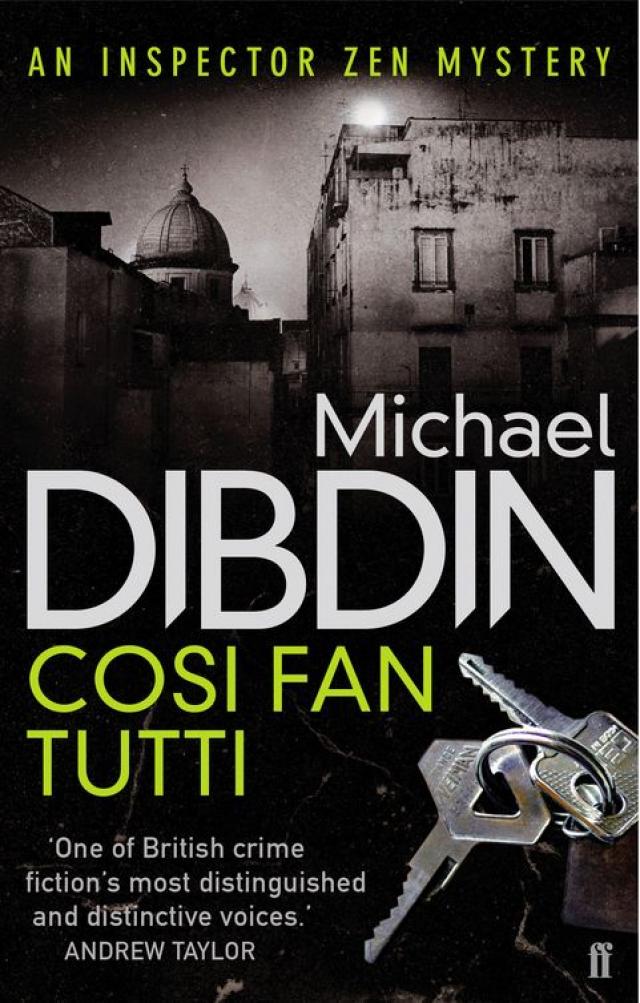
Cosi Fan Tutti
Michael Dibdin
Michael Dibdin
In this, the fifth book in the acclaimed Aurelio Zen series, Zen finds himself in Naples, in disgrace - and having the time of his life. Like the rest of Italy, Naples is concerned about its image and trying to clean up its act. Unfortunately it seems that someone is taking this rather too literally. Corrupt politicians, shady businessmen and eminent mafiosi are disappearing off the streets at an alarming rate. This is all very tedious for Zen, whose commitment to his work is at an all-time low. He would far rather amuse himself by sorting out the romantic entanglements of his landlady's nubile daughters and putting the fidelity of their unsuitable lovers to the test. But in the end he discovers that even in the 'New Italy' of the 1990s, some things, above all love and deception, never change.
Read online