The End of the Road

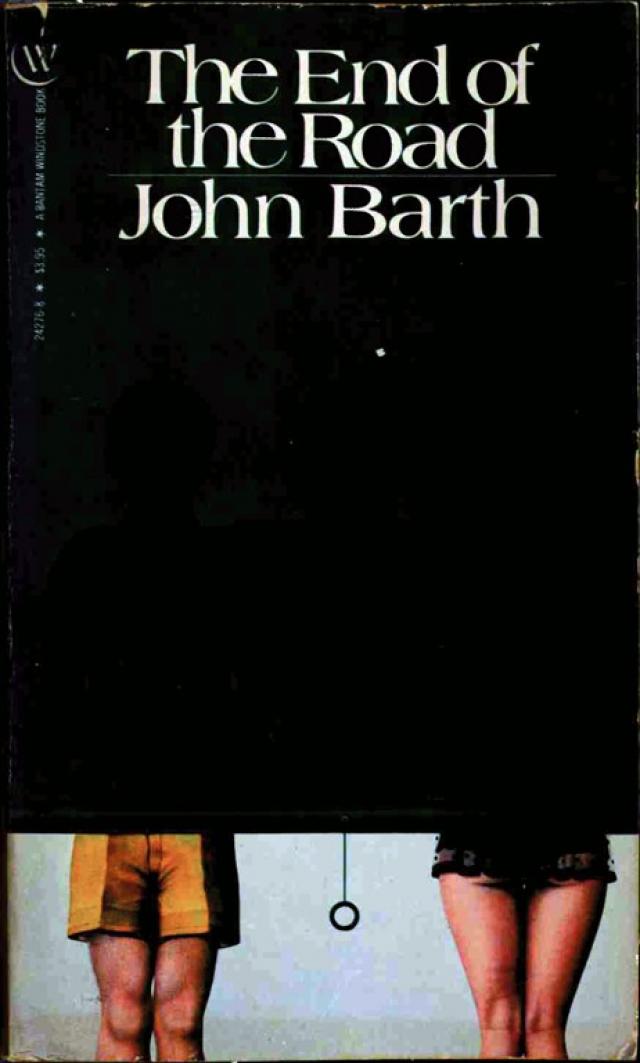
The End of the Road

John Barth

Fiction / Literary Criticism

Its first-person protagonist, Jacob Horner, suffers from nihilistic paralysis: an inability to choose a course of action. As part of a schedule of unorthodox therapies, Horner's nameless Doctor has him take a teaching job at a local teachers college. There Horner befriends the super-rational existentialist Joe Morgan and his wife Rennie, with whom he becomes entangled in a love triangle, with tragic results. The book deals with several issues that were controversial at the time, including racial segregation and abortion. (from wikipedia)
Read online
  • 355
Lost in the Funhouse

Lost in the Funhouse

John Barth

Fiction / Literary Criticism

Barth's lively, highly original collection of short pieces is a major landmark of experimental fiction. Though many of the stories gathered here were published separately, there are several themes common to them all, giving them new meaning in the context of this collection.
Read online
  • 345
The World of H.G. Wells

The World of H.G. Wells

Van Wyck Brooks

History / Criticism / Literary Criticism

An excerpt from the Introduction: A natural pause appears to have come in the career of Mr. H .G. Wells. After so many years of travelling up and down through time and space, familiarizing himself with all the various parts of the solar system and presenting himself imaginatively at all the various geological epochs, from the Stone Age to the end of the world, he has for good and all domesticated himself in his own planet and point of time. This gradual process of slowing down, so to speak, had been evident from the moment of his first appearance. The most obvious fact about his romances of science, considered as a series, is that each one more nearly approached the epoch in which we live, and the realities of this epoch. From the year A.D. 802, 701, witnessed in his first romance by the Time Traveller, we found ourselves at last in the presence of a decade only so remote as that of the war which has now befallen Europe. A similar tendency in his novels has been equally marked. The possibilities of science and socialism have received a diminishing attention relatively beside the possibilities of human reaction to science and socialism. It is individual men and women, and the motives and personalities of individual men and women, which now concern him. Still retaining the entire planet as the playground of his ideas, still upholding science and socialism as his essential heroes, he has been driven by experience to approach these things through human nature as it is. In a recent essay he has told us not to expect any more dramatic novelties: for the present at any rate our business must be to make science and socialism feel at home. Whether or not this may stand as a general diagnosis of our epoch, it is a remarkable confession with regard to his own place in it. For it signifies nothing less than that he has reached the limit of his own circle of ideas and finished his own pioneering, and that his work for the future will be to relate the discoveries of his youth with human experience. He is no longer a "new voice"; his work belongs, for good or ill, to history and literature, and he presents himself from this time forward as a humanist.
Read online
  • 287
The Death of Helena

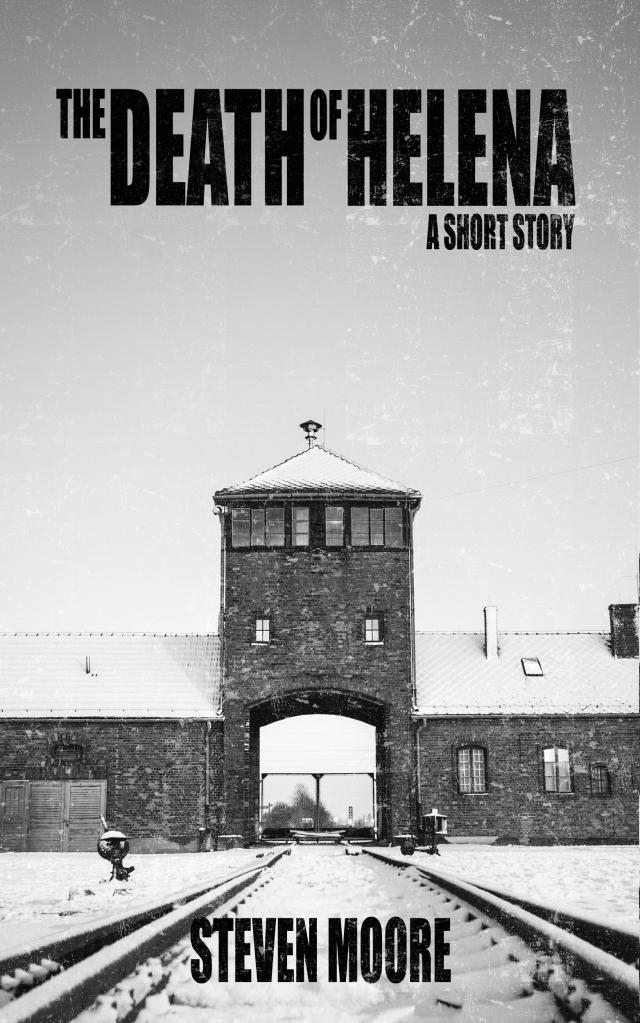
The Death of Helena

Steven Moore

Literature & Fiction / Literary Criticism

Imagine being dragged from your bed in the darkest, coldest hours of the night, and taken to a place you believed only existed in nightmares.Imagine being dragged from your bed in the darkest, coldest hours of the night, and taken to a place you believed only existed in nightmares.That is what happened to Helena, and the rest of the haunted souls in Krakow's Podgorze Ghetto. She had heard the rumours. They all had. But with half of her family already dead or missing, hope was all that Helena had left. But hope can be distinguished as easily as a candle in the wind. Nazi liquidation wasn't just a nightmare. It was real. And it was happening to Helena.
Read online
  • 277
At His Gates: A Novel. Vol. 2 (of 3)

At His Gates: A Novel. Vol. 2 (of 3)

Mrs. Oliphant

Fiction / Literary Criticism

Excerpt from At His Gates, Vol. 2 of 3: A Novel Norah had closed the garden door heedlessly after her. They were thus shut in, the four together confronting each other, unable to escape. About the Publisher Forgotten Books publishes hundreds of thousands of rare and classic books. Find more at www.forgottenbooks.com This book is a reproduction of an important historical work. Forgotten Books uses state-of-the-art technology to digitally reconstruct the work, preserving the original format whilst repairing imperfections present in the aged copy. In rare cases, an imperfection in the original, such as a blemish or missing page, may be replicated in our edition. We do, however, repair the vast majority of imperfections successfully; any imperfections that remain are intentionally left to preserve the state of such historical works.
Read online
  • 232
At His Gates: A Novel. Vol. 1 (of 3)

At His Gates: A Novel. Vol. 1 (of 3)

Mrs. Oliphant

Fiction / Literary Criticism

Mr and Mrs Robert Drummond lived in a pretty house in the Kensington district; a house, the very external aspect of which informed the passer-by who they were, or at least what the husband was. The house was embowered in its little garden; and in spring, with its lilacs and laburnums, looked like a great bouquet of bloom as such houses often do. But built out from the house, and occupying a large slice of the garden at the side, was a long room, lighted with sky windows, and not by any means charming to look at outside, though the creepers, which had not long been planted, were beginning to climb upon the walls. It was connected with the house by a passage which acted as a conservatory, and was full of flowers; and everything had been done that could be done to render the new studio as beautiful in aspect as it was in meaning. But it was new, and had scarcely yet begun, as its proprietor said, to \'compose\' with its surroundings. Robert Drummond, accordingly, was a painter, a painter producing, in the mean time, pictures of the class called genre; but intending to be historical, and to take to the highest school of art as soon as life and fame would permit.
Read online
  • 227
At His Gates: A Novel. Vol. 3 (of 3)

At His Gates: A Novel. Vol. 3 (of 3)

Mrs. Oliphant

Fiction / Literary Criticism

Excerpt from At His Gates, Vol. 2 of 3: A Novel Norah had closed the garden door heedlessly after her. They were thus shut in, the four together confronting each other, unable to escape. About the Publisher Forgotten Books publishes hundreds of thousands of rare and classic books. Find more at www.forgottenbooks.com This book is a reproduction of an important historical work. Forgotten Books uses state-of-the-art technology to digitally reconstruct the work, preserving the original format whilst repairing imperfections present in the aged copy. In rare cases, an imperfection in the original, such as a blemish or missing page, may be replicated in our edition. We do, however, repair the vast majority of imperfections successfully; any imperfections that remain are intentionally left to preserve the state of such historical works.
Read online
  • 218
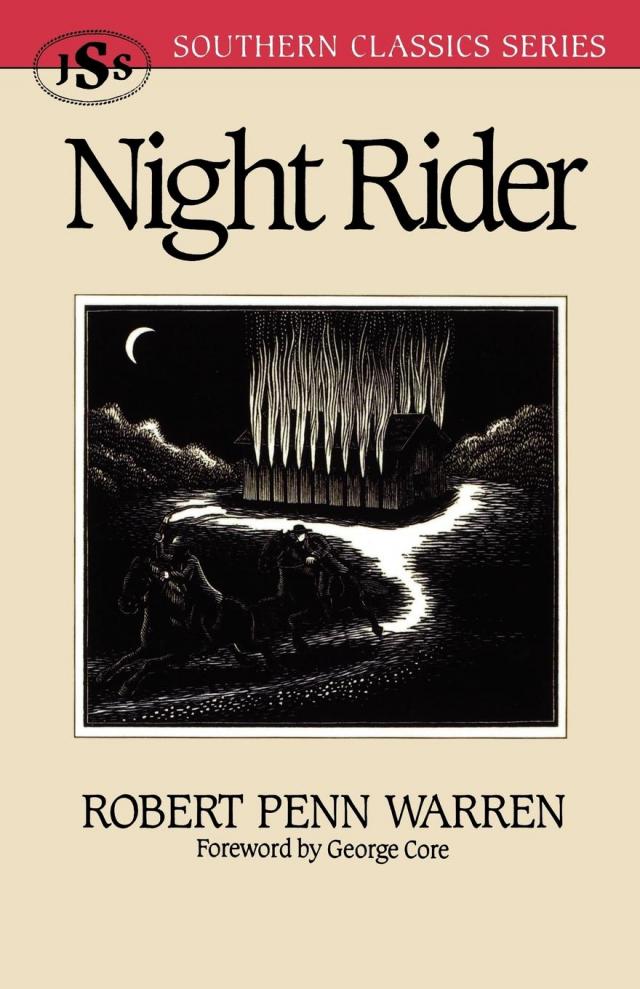
Night Rider

Night Rider

Robert Penn Warren

Poetry / Fiction / Literary Criticism

Warren's first novel, set during the "tobacco wars" that raged in Kentucky and Tennessee in the early part of this century. Percy Munn is one of Warren's innocent idealists whose delusions become murderous as he attempts to define himself by action in the unfolding violence around him. Southern Classics Series.
Read online
  • 211
Germanicus

Germanicus

Jo-Marie Claassen

Nonfiction / Criticism / Literary Criticism

This is the first translation into English of the verse drama Germanicus by the Afrikaans poet N.P. Van Wyk Louw. The work was based on the first three chapters of the Annales of the Roman historiographer Tacitus. The drama has been considered a highlight in Afrikaans literature since its publication in 1956.This is the first translation into English of the verse drama Germanicus by the Afrikaans poet N.P. Van Wyk Louw. The work was based on the first three chapters of the Annales of the Roman historiographer Tacitus. After the death of Emperor Augustus, his successor Tiberius’ adopted son Germanicus recoils from the cruelty inherent in imperial rule. In the end he helplessly acquiesces, finally welcoming his own death as a means of escape from the burden of empire. The drama has been considered a highlight in Afrikaans literature since its publication in 1956. Its interest lies in its amazing sweep of words, Louw’s sense of history and his portrayal of the inevitability of the corruption inherent in power. Louw’s great monologues dominate the debates between his main protagonists. His poetic Afrikaans had a grand eloquence that swept his audience along in a torrent of densely-argued meaning. Such conciseness offered severe challenges to the translator. Claassen’s colloquial translation manages to capture both the essence of Louw’s dramatic dialogues and the rhythmic cadences of the original poetry. The translator provides a lengthy Introduction, aimed at both a classical and a theatre-going readership, explaining the historical background and discussing Louw’s interpretation of Tacitus’ narrative and the constraints under which a translator works. A brief overview of the contents of the drama’s eight scenes is followed by a select bibliography.
Read online
  • 201
183