All the demons are here, p.1
All the Demons Are Here, page 1


This book is a work of fiction. In order to give a sense of the times, some real events and names of real people and places appear in the book, but the characters and events depicted in this book are imaginary and all the names and events are the product of the author’s imagination or are used fictitiously.
Copyright © 2023 The Hellfire Corporation
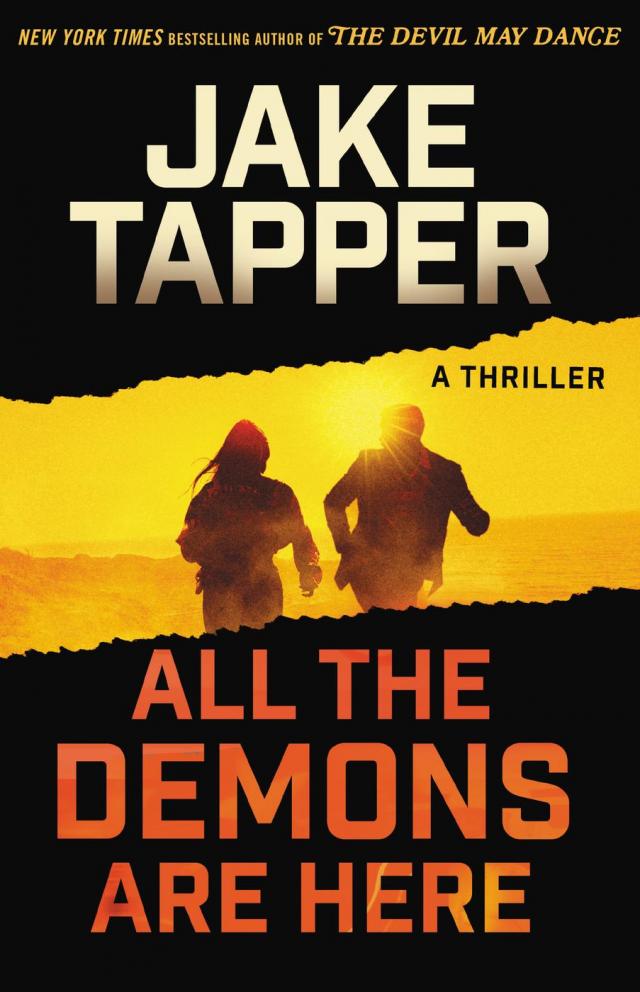
Cover design by Tal Goretsky
Cover photographs: Arcangel Images (man and woman), Getty Images (background)
Cover © 2023 Hachette Book Group, Inc.
Hachette Book Group supports the right to free expression and the value of copyright. The purpose of copyright is to encourage writers and artists to produce the creative works that enrich our culture.
The scanning, uploading, and distribution of this book without permission is a theft of the author’s intellectual property. If you would like permission to use material from the book (other than for review purposes), please contact permissions@hbgusa.com. Thank you for your support of the author’s rights.
Little, Brown and Company
Hachette Book Group
1290 Avenue of the Americas, New York, NY 10104
littlebrown.com
twitter.com/LittleBrown
facebook.com/LittleBrownandCompany
First ebook edition: July 2023
Little, Brown and Company is a division of Hachette Book Group, Inc. The Little, Brown name and logo are trademarks of Hachette Book Group, Inc.
The publisher is not responsible for websites (or their content) that are not owned by the publisher.
The Hachette Speakers Bureau provides a wide range of authors for speaking events. To find out more, go to hachettespeakersbureau.com or email hachettespeakers@hbgusa.com.
Little, Brown and Company books may be purchased in bulk for business, educational, or promotional use. For information, please contact your local bookseller or the Hachette Book Group Special Markets Department at special.markets@hbgusa.com.
ISBN 9780316424592
E3-20230526-NF-DA-ORI
Contents
Cover
Title Page
Copyright
Dedication
Epigraph
Chapter One: Ike
Chapter Two: Lucy
Chapter Three: Ike
Chapter Four: Lucy
Chapter Five: Ike
Chapter Six: Lucy
Chapter Seven: Ike
Chapter Eight: Lucy
Chapter Nine: Ike
Chapter Ten: Lucy
Chapter Eleven: Ike
Chapter Twelve: Lucy
Chapter Thirteen: Ike
Chapter Fourteen: Lucy
Chapter Fifteen: Ike
Chapter Sixteen: Lucy
Chapter Seventeen: Ike
Chapter Eighteen: Lucy
Acknowledgments and Sources
Discover More
About the Author
Also by Jake Tapper
To Daryl, Alana, Max, and Milo
I created the character called Evel Knievel, and he sort of got away from me.
—Robert “Evel” Knievel, June 1998
Explore book giveaways, sneak peeks, deals, and more.
Tap here to learn more.
Chapter One
Ike
Butte, Montana
June 1977
So I slept in the hobo jungles
Roamed a thousand miles of track
—Elvis Presley, “Guitar Man”
The toughest tavern in Big Sky Country wasn’t the legendary Jimtown Bar near Lame Deer, with its acre of spent beer cans under which a corpse or two were likely buried. It wasn’t Al’s Tavern near the Billings sugar plant, with its buckshot-scarred front door and concrete floor stained with blood and brains.
No, that honor belonged to the Dead Canary, a dive outside Butte where the shot glasses once used to throw whiskey down the coal-dusted throats of dying miners were now clasped by Hells Angels and truck-stop hookers, poachers, and drug dealers from the Flathead Indian Reservation. Plus the gang of circus freaks more formally known as the pit crew of legendary daredevil Evel Knievel.
I was one of those freaks.
That Saturday night, I was hanging out at the bar staring down the dozens of elk-head trophy mounts hung without rhyme or reason, as if customers paid their bar tabs with taxidermy. The effect was bizarre, like the beasts were stampeding right at me.
I was sitting beneath a sign that announced POWDER: NO CANDLES OR LIGHTED PIPES ALLOWED IN THIS DRIFT PER ORDER, a relic from the Montana Mining Company’s hunt for silver and gold and a warning that seemed a little too on the nose—for the bar and for me. This place was always one lit match away from disaster; it was squat and dim, with no windows for an easy escape. A cover band jammed in the far corner. Drunks crashed into each other on the makeshift dance floor.
I was tossing back whiskey and trying to make the bartender, Rachel Two Bears, laugh. She was tall and lean and hailed from the Crow Rez at the Wyoming border, though now she lived above this bar. She told me she was just there to help out a friend and planned to leave once Labor Day came around, but it seemed like she’d made herself at home, and I was glad about that. I wasn’t sure if we liked each other or just hated the same people. Okay, I’m full of shit—I was crazy about her.
“Big push to spring Patty Hearst for good,” I said, reading the front page of the Montana Standard. The kidnapped heiress turned bank robber was out on bail while she appealed her conviction, and newspaper columnists fed us daily dollops of details about how hard life had been for her when she was criming.
“Carter’s going to commute her sentence, mark my words,” she practically spat.
“You really think so?”
“The best ‘justice’ system money can buy,” she said. She mockingly assumed the voice of a bleeding heart: “Oh, poor girl, she was only nineteen when it started.”
“The Marines got me when I was seventeen. Where’s my sympathy?”
“Right here,” she said and refilled my shot glass.
Rachel’s politics were interesting; she seemed to have sympathy for Native American and other civil rights causes, but generally speaking, she was pretty hard-core law-and-order. Especially when it came to rich white folks gaming the system.
There were bikers in the house, big, ugly, hairy dudes. Some of those guys were freedom-loving rebels; others were actual fascists. There were also cowboys and Indians, students and farmers—and I wondered which way the night would go.
As if she’d read my mind, Rachel said, “Cantina scene tonight.” A few days before, Rachel and I had gone to see Star Wars.
“Lotta weirdos,” I agreed. “Not sure this means we’re at the start of an epic adventure, though.”
She smiled. “You’re not getting Leia’ed, if that’s what you mean.”
“Solo again,” I grumbled.
She winked at me, then went down the bar to pour a shot for a short, stocky biker in a black leather jacket.
Rachel was an enigma, a conundrum, a paradox—all those vocab words Mom made me study (for naught, since I bypassed college for the Marines). Anytime I tried to find out more about her—about life on the rez or where her family was or how she’d ended up here, of all places, in this rotten saloon in Butte—I hit a wall. She wasn’t a good liar, didn’t have a prepared story about who she was. Anytime I pried, she just closed up, flicked her attention past my shoulder, and waited for the conversation to move on. I had secrets too, of course, and sometimes I wondered who had more to hide.
The biker grunted his thanks. He was about as wide as a refrigerator, and on the back of his leather jacket, a German iron cross was painted in red. He downed his drink and signaled for another. Rachel told him to pay for the first two. He dug into the pocket of his jeans, dropped the change on the bar, and slowly counted his pennies and dimes.
Behind him, a smelly, greasy-haired cowboy mocked the biker in a dumb-guy voice: “One nickel…two nickels…der…I lost count.”
The biker turned to the grinning cowboy. “Why don’t you fuck off and—”
Rachel interrupted. “Kindly excuse Bitch Cassidy here,” she said, referring to the cowboy. “He’s just stoned. Fact is, he’s gonna pay for your drinks as compensation for his rudeness as long as you walk away and don’t cause no trouble. Okay, handsome?”
The biker stared into her dark eyes, possibly getting lost in them the way I frequently did. Cowboy started to complain, but Rachel’s scowl shut him down. The biker scraped up his change and walked back over to the corner where his buddies were emptying pitchers.
“All right, Midnight Cowpie,” Rachel said. “What are you buying other than two shots for the fifth column?”
The cowboy wasn’t happy, and Rachel’s quickness didn’t endear her to him. Not that he was going to do anything about it. Rachel had a shotgun behind the bar and a Model 19 Combat Magnum handgun on her hip, and if her little show-and-tell didn’t keep him in line, I was ready to. I had a couple years in the Corps and forty pounds on him and would’ve been happy to shut his mouth.
Wild Turkey on the rocks, he said. Rachel obliged, and as he walked off, she poured me one too. Wild Turkey was what my boss drank. If Evel caught you with anything else, he’d give you shit for being disloyal or soft, depending on the beverage.
“Motley crew,” she said.
“Motleyest in a while,” I said.
“I don’t think that’s a word.”
“Maybe not. Woulda been ha d Webster ever visited Montana.”
“Bikers and miners and drunks, oh my!” she said.
“And he’s talkin’ with Davy, who’s still in the navy and probably will be for life,” I sang.
She spritzed carbonated water from the soda gun into a glass and raised it. “May we be who our dogs think we are.” Mac, her black-and-white mutt behind the bar, grunted.
I racked my brain for a decent toast that wouldn’t offend her, but nothing I’d picked up in prep school or the Marines qualified. Not that she was paying attention. She, along with a couple of the bar creeps, had turned toward the door. So I looked too.
A young blond woman wearing the kind of gray tailored suit you’d see on the streets of Manhattan—not in rural Montana—had just entered. I must have been drunker than I thought, because she looked exactly like my sister. But she couldn’t be my sister. My sister had no idea where I was. My sister was in DC, and I was hiding here, where she’d never find me. I squinted, and the woman locked eyes with me and gave me my sister’s goofy grin.
“Holy fucking shit,” I said.
“Ike!” She ran across the room, flung herself into my arms, and squeezed the breath out of me. I hugged her too, pretending I was happy she was here. I was, in a way.
She leaned back to get a better look at me and tugged at the beard I’d grown. “Not Marine Corps regulation.”
“How the fuck did you find me?”
Her nose wrinkled at the curse, then she smiled. “I’m a reporter, stupid.”
I guided Lucy to a corner table between the bar and the door, away from everybody, then went back and got her a beer and myself a whiskey rocks. “You can’t leave a military hospital in the middle of the night and expect no one to worry,” she said when I came back. “I thought Mom and Dad were overreacting, but seeing you now, I’m not so sure.”
“The Marines know where I am,” I said. This wasn’t exactly true, but I hadn’t been officially declared AWOL.
“That’s not what the Corps told Dad. He and Mom are freaking out.”
Lucy didn’t know the whole story, and I wasn’t about to burden her with it. She was only two years older than me, but you’d think she was my mom. “How are they?”
“Worried about you,” Lucy said, “but keeping busy.” She looked down at her beer, caressing the lip of the glass. “Mom’s been dragging Dad to every Shakespeare play at the Folger. Last week was The Tempest.”
“Dad must fucking hate it.”
“He’s fine. Okay, he’s not totally fine. He’s drinking again.” She looked pointedly at the glass in my hand.
I glanced away. Her eyes always were a little too sharp. “And how’s he dealing with the new administration?” Dad was a moderate Republican senator from New York; his respect for Carter, shall we say, knew bounds. Vice President Rockefeller had been a mentor of his, and he’d adored President Ford. I didn’t give a damn about any of this, but Lucy loved talking politics, and it got her out of my grille.
“He feels guilty, I think,” Lucy said. “By coming out against Nixon so early, he worries he undermined Ford and set the stage for his defeat.”
“How’s work at the paper?” The previous summer, right out of Yale, Lucy had been hired as an intern at the national desk of the Washington Evening Star.
“I left the Star, I quit,” she said. “I have a new job. Long story, but I’d rather hear about you. How did you end up…” She looked around the room as if she smelled something foul. Lucy had been a protective older sister—always looking out for me, comforting me when I got suspended for fighting in high school, supportive when I enlisted before graduation. “Like, what do you talk about with this…gathering of the Cro-Magnon Society?”
“Work,” I said. “Bikes. Trucks. I’ve heard you and your friends yammering, and that’s not exactly the fucking Algonquin.”
“That’s true,” she said, laughing. She raised her glass to me. “Do you still watch TV? Back home, everyone’s talking about Roots.”
“I don’t have a TV.” My digs consisted of a bed in a room the size of a closet in what was essentially a flophouse for the pit crew. “But I read the book. And a lot of other stuff. Don’t really miss TV, except Carson.”
The band took a break. Rachel stepped out from behind the bar—cowboy boots, tight blue jeans, black sleeveless top. I liked watching her move. She went over to the jukebox. The first guitar bursts of Led Zeppelin’s “All the Demons Are Here” ricocheted around the room.
Ev’ryone gettin’ crazy
Desperation in the air
The storm made the trip and crashed the ship
We were all in deep despair
Ferdinand saw the evil
Knew from whence it came
The cursed love, the gods above,
The ship consumed by flame
Hellllllllllll is emmmmmmpty
And all the demons are here
Hellllllllllll is emmmmmmpty
And all the demons are here
Somewhere in the midst of one of Robert Plant’s more orgasmic vocals, the bar door opened and a whiff of gasoline from a motorcycle that was obviously jetting way too rich punched me in the face. A man by the door lit a cigarette, and in the lighter’s flare, his facial features were sharp, hawklike. When I blinked, the man’s face filled out, became chubby. To those who haven’t had them, flashbacks are difficult to explain, especially when they’re from combat, but for a moment in time, the sensory overload of rhythm and odor and harsh sounds pushed me out and away from Lucy and into a sweaty heart-pounding oblivion.
Lucy reined me in. “I didn’t know Zeppelin had made it to the wilds of Montana.”
It took me a second to get my bearings. “Oh, sure. We have the wheel now too.”
She shrugged. “I figured your jukes would be chock-full o’ Nitty Gritty Dirt Band.”
I looked at her. I’d been mad at Lucy. Growing up, I was closer to her than anyone, then she went off to college and lived her life and created a vacuum in mine and everything changed. I began spinning out of control; I got in trouble at school, and by the time I enlisted, I’d been drinking and fighting for so long, I figured I might as well get paid for it. Of course, Mom and Dad begged me not to do it, but that just made me want to get away more. I knew it wasn’t logical to blame any of this on Lucy, but I did anyway. I also wanted to tell her everything, like what had happened to me in Lebanon. But I couldn’t talk about it. Not even to her.
“Bathroom,” I said, standing. “Be right back.”
Swaying at the urinal, I read for the five hundredth time the September 9, 1974, New York Daily News front page that someone had tacked on the wall years before. Although the headline read “Nixon Gets Full Pardon,” most of the page was about my boss: “Evel Fails, Chutes into Canyon; He Is Unhurt in 600-Ft. Drop.” It was the story of Knievel’s ill-fated but spectacular jump over Snake River Canyon in a rocket that looked like something Wile E. Coyote had ordered from the Acme Corporation. That crazy stunt shared billing with a moment of actual historic import. I couldn’t help smiling, thinking of that crazy daredevil. Standing there looking at the photo of his broken rocket slowed everything down in my mind and calmed me, got me out of my fight-or-flight zone and gave me back some perspective. Evel Knievel! People couldn’t get enough.
I’d joined his pit crew seven months before. Evel had seen me on a TV news segment about my so-called heroics in Lebanon, an urban battle and urban legend in which I’d taken part, and it included some stunts I’d pulled on the back of an old motorcycle. The Pentagon was only too excited to sell to the American public via 60 Minutes its (redacted) version of my story to cloak the more important narrative of our disastrous mission and the larger problem of the dying American empire flailing and failing abroad.
If you’re lookin’ for trouble, Elvis sang from the jukebox out in the bar, you came to the right place. The King’s words relaxed me.
After seeing the 60 Minutes segment, Evel had sent a message to me at the Bethesda Naval Hospital via the Montana grapevine to look him up if I ever made it to Butte. When I got out here, he was impressed with my work ethic and the way I handled a motorcycle; he hired me to work on V-twin engines and ride like I had nothing to lose. A world-famous celebrity was shining his affection on me, and I got to bask in it—for a while, anyway. He was a moody guy, and he was currently blaming me for his latest near-fatal crash, which placed me atop a short list of people he wanted to murder. I was hoping to make my way off that list and back to the light.